Proper nutrition is critical during a young horse’s growth years. Balanced feeding supports bone development, muscle growth, and overall soundness—key factors for a future jumping career.
Young sport horses require high-quality forage, appropriate protein levels, and carefully balanced minerals. Overfeeding can be just as detrimental as underfeeding, increasing the risk of developmental issues.
A tailored nutrition plan, adjusted as the horse matures, helps ensure steady growth and long-term health. Nutrition is not about quick results—it’s about setting horses up for sustainable performance.
As someone who’s been working with horses for a lifetime, I’ve recognized for years that training a spoiled horse feels like fighting a cancer of the mind. It’s incredibly rewarding once the spoiled mind has been healed. We just hope it’s not re-infected by the original behavior shaper.
We’re about to talk about: how they are created, how to spot them, and how to fix them!
Cause Spoiled is not about kindness, treats, and comfort. Spoiling is: RELIEF WITHOUT RESPONSIBILITY! ie: not focusing or understanding the desired end result for the horse’s future and those who will come into contact with it in future.
A spoiled horse is: ▫️ Protected from pressure ▫️ Rescued from discomfort ▫️ Rarely asked to adapt
They don’t learn: ▫️ Emotional regulation ▫️ Cause and effect ▫️ How to try through confusion
What They Look Like Low resilience + high entitlement + fragile nervous system.
They often look confident or bold, but internally they are: ▫️ Easily overwhelmed ▫️ Easily offended ▫️ Easily shut down or explosive
The mentality they carry: “I shouldn’t have to.” “This feels unfair.” “Someone else will fix this.”
Nervous system response: ▫️ Low tolerance for frustration ▫️ High reactivity to pressure ▫️ Poor recovery after stress
They never learned how to stay mentally present when things got hard.
Typical spoiled horse behaviors: -Won’t stand tied -Pushy in personal space -Explosive over small corrections -Selectively obedient -Lazy until suddenly reactive -Refuses before it tries -Melts down over small things -Shuts off instead of working through confusion
Horses do not do these things because they are “bad”, they do them because they never learned how to COPE.
Spoiled horses are anxious and not confident. Reasons being: ▫️ They often overreact ▫️ They don’t trust their own ability ▫️ They rely on others to regulate their world
At times they may appear dominant, lazy, or entitled. But under all that is crippling fear and a huge lack of confidence. This is where their dramatic spooking comes from when their comfort bubble is popped.
How To Fix Them The three biggest things that WILL NOT WORK to fix a spoiled horse: ❌ More pressure suddenly ❌ More softness ❌ Inconsistency
What WILL WORK to fix a spoiled horse: 💚 Predictable structure
We need to offer our horses consistent training with the same rules and clear expectations. 💚 Gradual discomfort
They need small manageable challenges with no rescuing. They need to feel the frustration and learn to think through it. 💚 Teaching the effort ➡️ relief connection
Trying = Relief
Avoiding = Work 💚 Emotional neutrality (from trainer)
Our part: no anger, no pleading and no guilt. 🙅🏻♂️
Calm, boring, consistency is what will rewire your spoiled horse into your ultimate partner. 💪🏼
What you’ll get: 🐴 Calm under pressure 🐴 Confidence with understanding 🐴 Willing and not reactive 🐴 Trust in you as a leader
Good trainers aren’t just training movement. They’re training nervous systems. The more you understand about a spoiled mind the more you can avoid or even fix it. FYI humans experience it much the same way. 😉
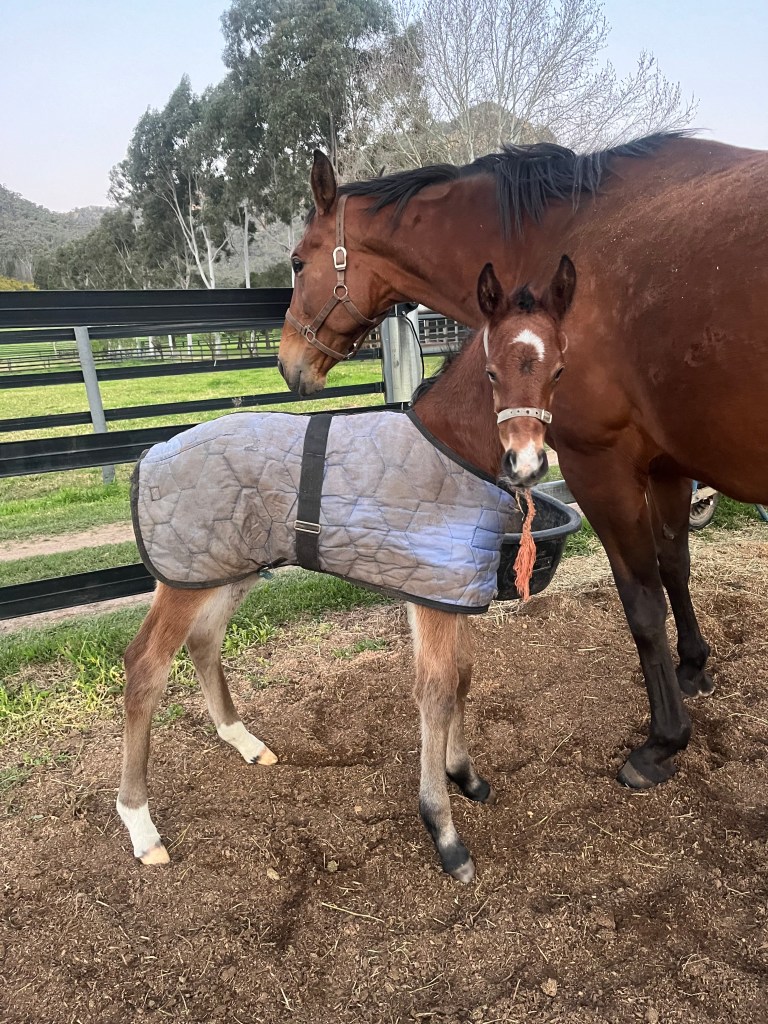
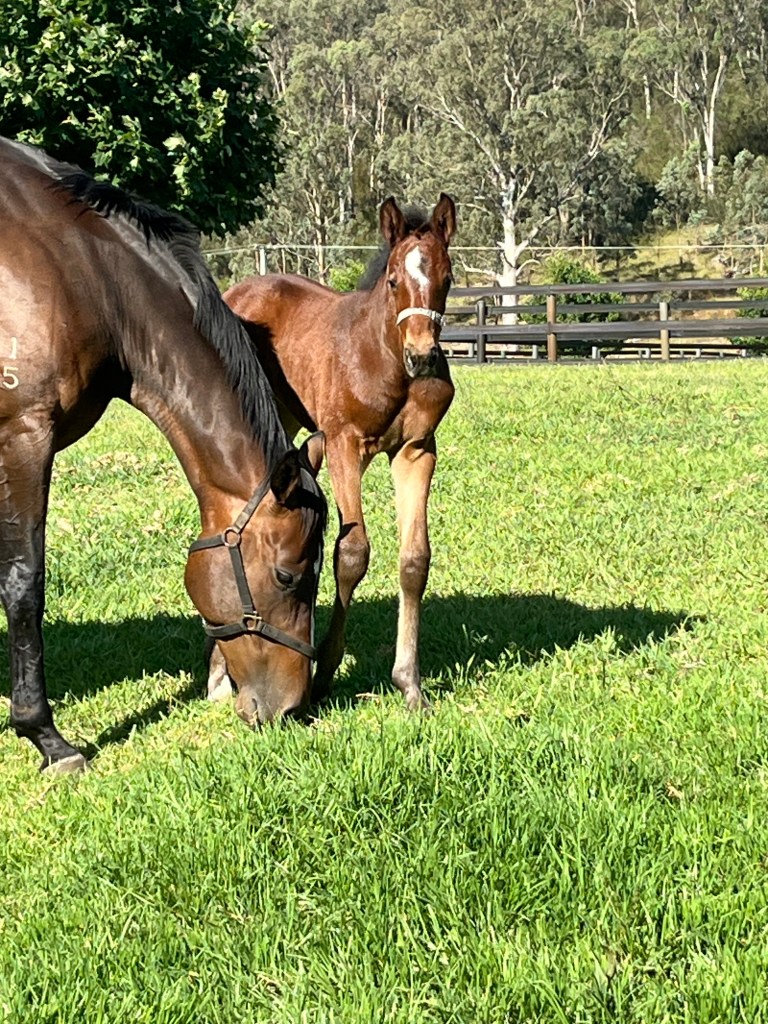
The foundations of a confident sport horse are laid early. Thoughtful handling during a foal’s first weeks helps create a young horse that is curious, trusting, and adaptable.
Basic handling—such as leading, grooming, and exposure to everyday environments—should be calm and consistent. Overhandling is unnecessary, but positive early experiences can make a significant difference later in training.
At RJ3 Sport Horses, we believe early education should support natural development while encouraging respect and confidence. These early steps help ensure our young horses transition smoothly into future training programs.
Breeding a successful show jumper begins long before a foal ever enters the arena. At RJ3 Sport Horses, our breeding philosophy is centred on producing horses with the athleticism, mindset, and soundness required for modern sport.
Today’s show jumping horses must combine scope, carefulness, rideability, and durability. Selecting the right bloodlines is about more than famous names—it’s about proven performance, correct conformation, and temperament. Mares play an equally critical role, contributing not only genetics but also early behavioural development.
Good breeding is a long-term investment. By prioritising quality over quantity, and pairing mares and stallions with purpose, we aim to produce horses that are competitive, trainable, and built for longevity in the sport.
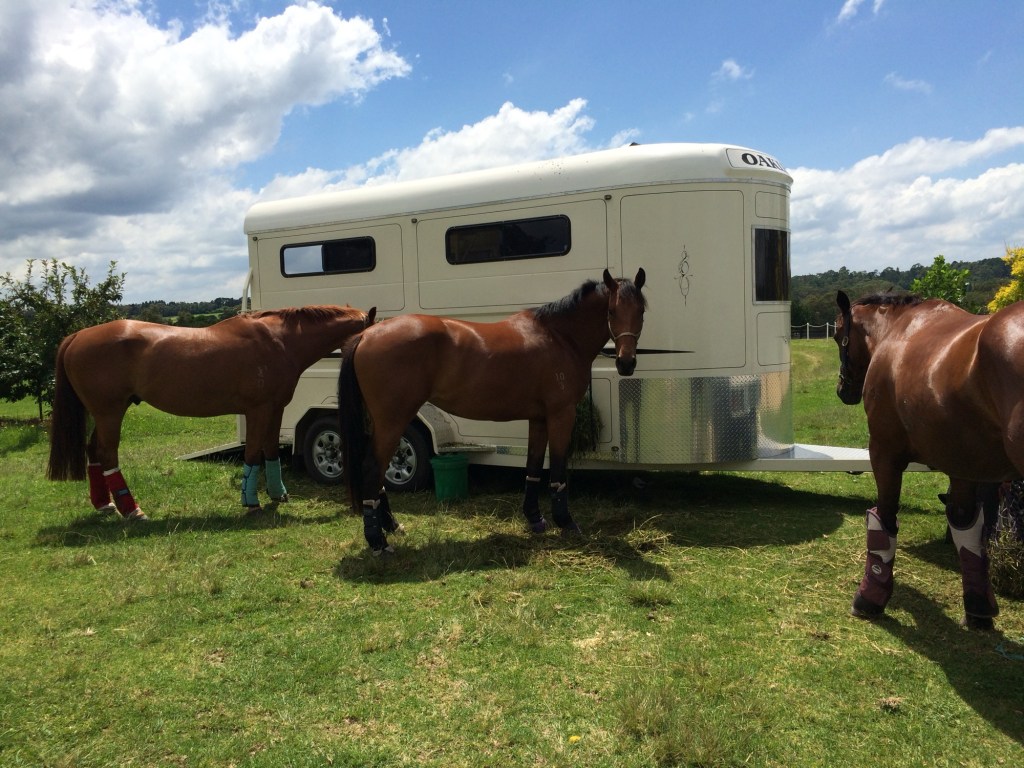
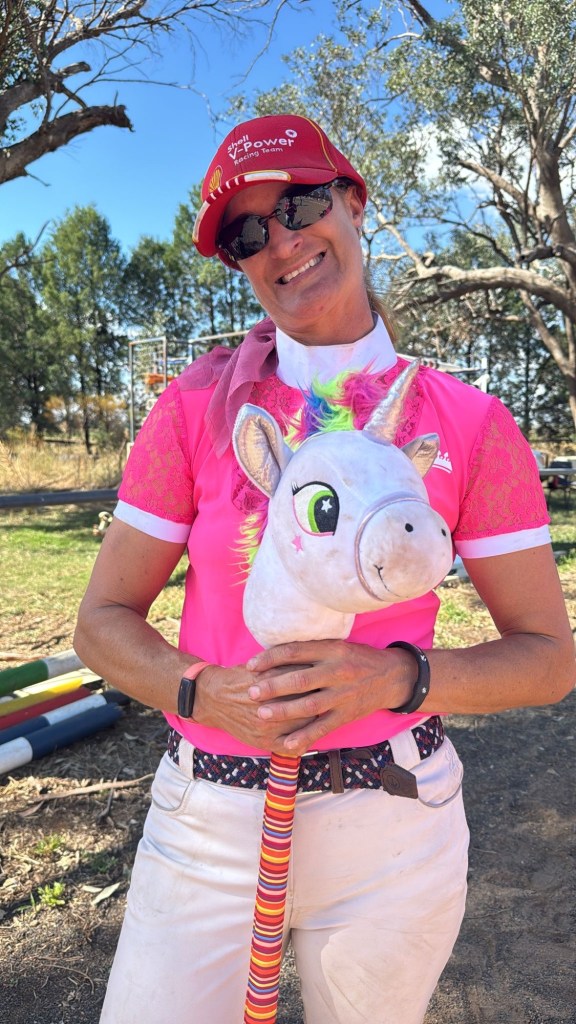
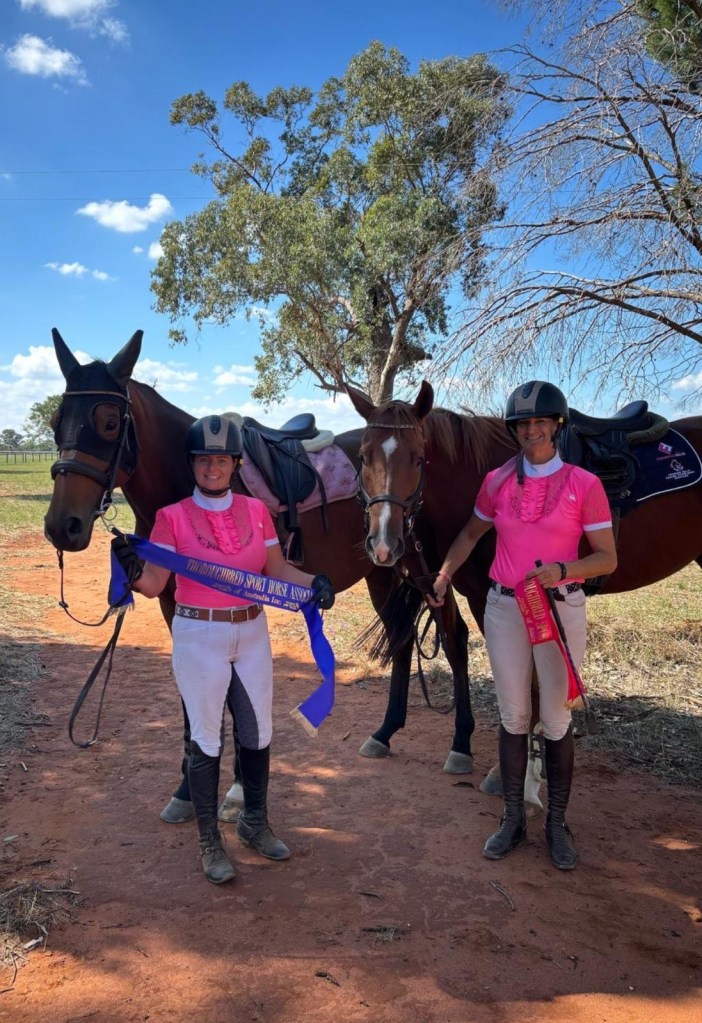
A team from Fernrigg traveled to Dubbo the 2nd weekend of April 2025 to participate in the show jumping event being run to help support the Pink Angels. This event was so much fun and included a fundraising team event on hobby horses.
Team Fernrigg (not being very competitive) brought home the win for Denman and added to the funds raised for Pink Angels.
The pink theme was a definite winner for everyone involved. The team were beautifully presented and everyone came away as winners.
The organisers did a fantastic job. We all had so much fun camping, the facilities were very good and we will definitely look to make this an annual event.
Equine embryo transfer has been used since 1970s and has increased in popularity over the years. Embryo transfer is a process that involves breeding a donor mare to a stallion and then transferring the resulting embryo at 7-8 days, into the uterus of a reproductively competent recipient mare, which carries the foal to term and raises it until weaning. For those mares that have difficulty even getting to the 7-8 day stage, or sub fertile stallions – ICSI (intracytoplasmic sperm injection) is now an option.
The resultant foal will be the genetic offspring of the donor mare and stallion.
Advantages
– allows donor to continue performance career while the recipient carries the foal.
– more than 1 pregnancy per year can be achieved from a single mare.
– foals can be obtained from mares that are sub fertile or cannot viably carry embryos themselves.
Disadvantages
– some breed registry societies have restrictions on the number of foals that can be registered per mare per season.
– extra vet expenses dependant on number of embryos/recipients needed if/when successful.
– more intensive management is required for donor and recipients.
The first step of the process is to synchronise the reproductive cycles of the donor and recipient mares. It is important that the recipient mare is at a similar stage in her cycle as the donor mare to ensure that her uterus is ready to accept the embryo.
The donor mare is bred to the stallion. Live cover, AI with fresh/chilled or frozen semen are all common methods. It is important that the mare is monitored, and the time of ovulation is known.
The flushing of the embryo is usually done at 7-8 days post ovulation. A sterile catheter is placed into the uterus of the donor mare and the embryo removed by flushing a special fluid into the uterus. The recovered fluid passes through a filter allowing the microscopic embryo to be retrieved. The embryo is then assessed and graded according to its appearance and then prepared for transfer. The embryo is then inserted into the recipient mare and a pregnancy scan is performed on the recipient mare 6-7 days following the transfer of the embryo.
Success Rates
A survival rate of 75-80% of good quality embryos recovered typically occurs following transfer. But it is also important to consider that embryo recovery rates may be as high as 75% or as low as 25%. There are many factors that influence the recovery rate including:
What is the difference, can you be both, what thoughts do you have about these titles??
Here is the ruling/description for an Amateur rider:
– Article 255.1 Amateur Riders Must not have competed in an Olympic Games or World Equestrian Games in either Jumping or eventing In the past 10 years must not have competed in a World Cup for jumping or in a 4* 3 Day event. Must not have competed in Section 1 and 2 at a Royal Show in Sydney, Brisbane, Melbourne, Adelaide or Perth in the past two years Amateur riders may not compete in an Amateur class if they compete in any class where the first round is higher than 1.20m at that show Amateur riders may not compete in an Amateur class on a horse that will compete in any class where the first round is higher than 1.20m at that show Riders may compete as Amateurs from the beginning of the calendar year in which they turn 21 years of age.
So by this definition I am 100% an amateur. I’ve been doing this my whole life, the term ‘amateur’ doesn’t really fit if you associate amateur as being less than professional.
Lucky to have lights when riding after dark is the only option
Here’s a couple of views that I have – you can be a professional amateur eg: you fit into the description, but are financial enough to purchase whatever horse at whatever level that suits you, you can quite happily employ a knowledgeable professional to train you and/or your horse that they also spent the time to help you find. You’re an amateur because you choose to be.
Inspired by professionals
The amateur that aims to be a professional. You would love nothing more than to be able to do nothing else but ride and produce show jumping horses, however you spend most of your time working for a wage to keep up the payments necessary for the upkeep of an animal that means so much to you.
Due to having a standard job, you usually have to work around working weekends and therefore can only do the shows that fit with this.
This scenario plays on your mind that you’re not going to get the miles/experience to ever be even with those who do this everyday and every weekend.
I believe it should be the frame of mind and experience that determines whether you’re an amateur or a professional, not your bank balance.
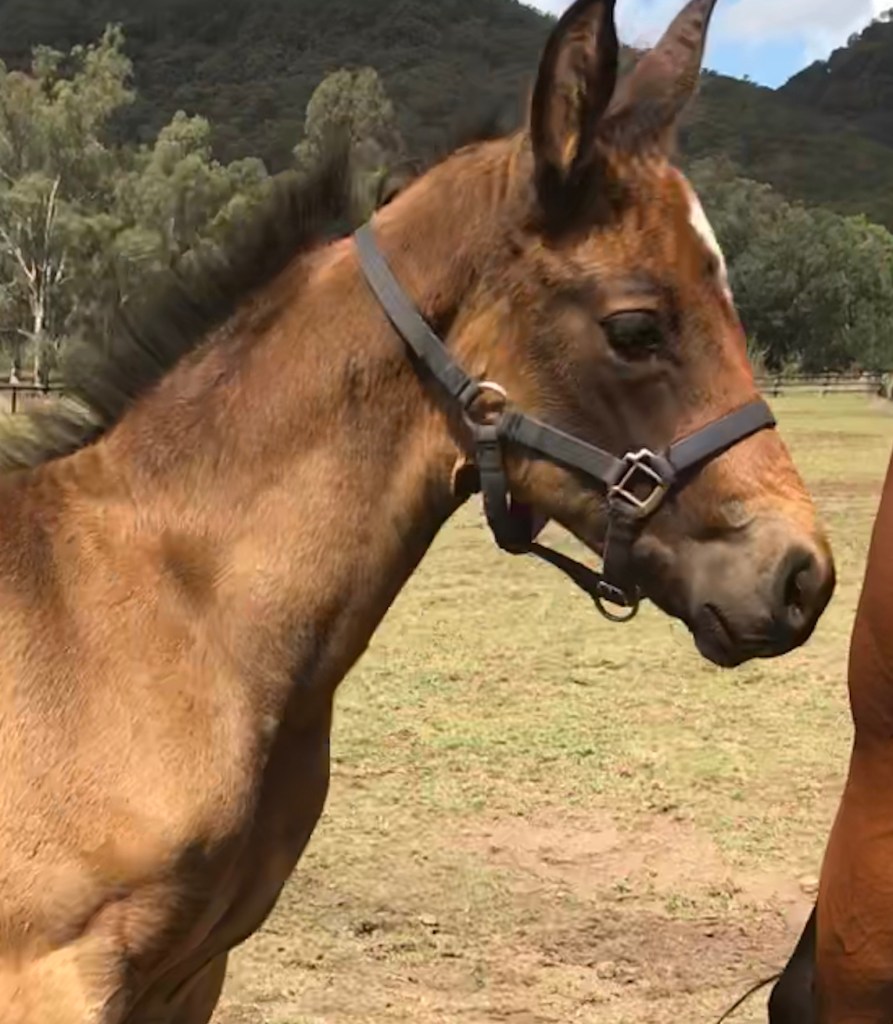
A horse’s future has everything to do with how it was brought up and the experience it had as a young horse.
Early handling by someone experienced with young horses, who has a good understanding of horse psychology and the way they learn is essential for success.
Good farrier care is essential for confirmation and is a life long skill that is required. Well mannered horses will always be valued.
Horses also need to live as horses and grow up with the natural skills that are required for their own mental development.
At RJ3 sport horses, every foal is treated as the individual it is, and they are brought up with the best knowledge available to them at the time. The theory is and has always been ‘do the best you can, and then when you know better, do better!’
Equine Metabolic Syndrome (EMS) is being seen more and more, or do we just have more awareness now?
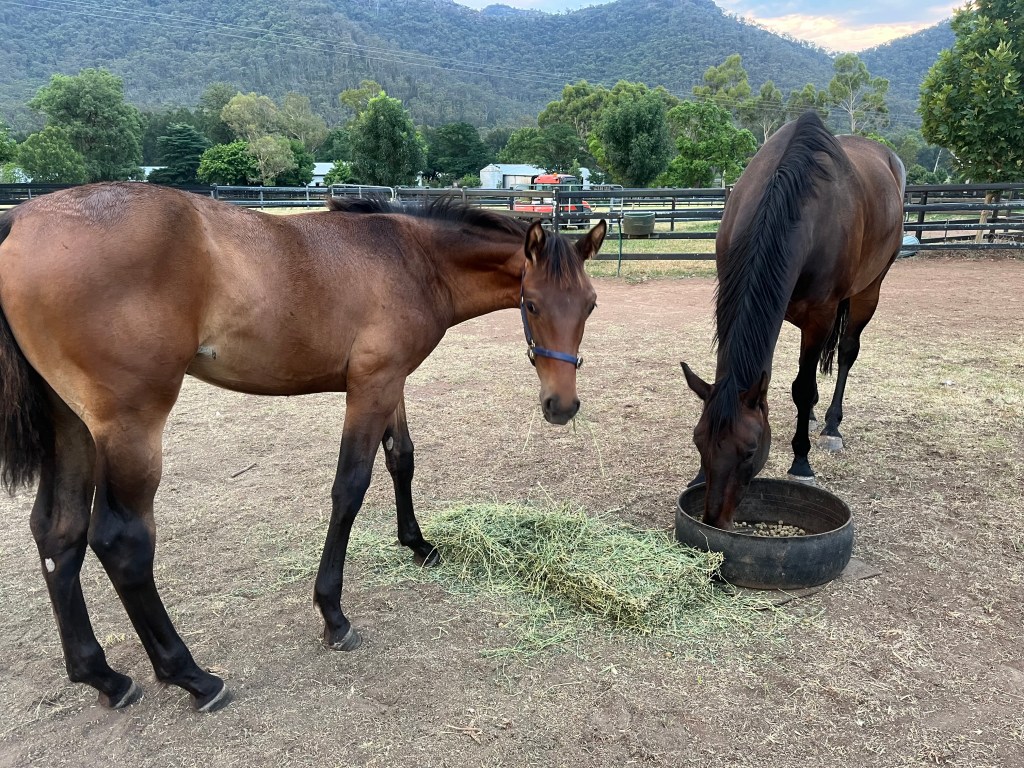
A happy horse has freedom, forage and friends. Young horses should grow up as horses, competition/work horses should have others in site so they don’t feel alone.
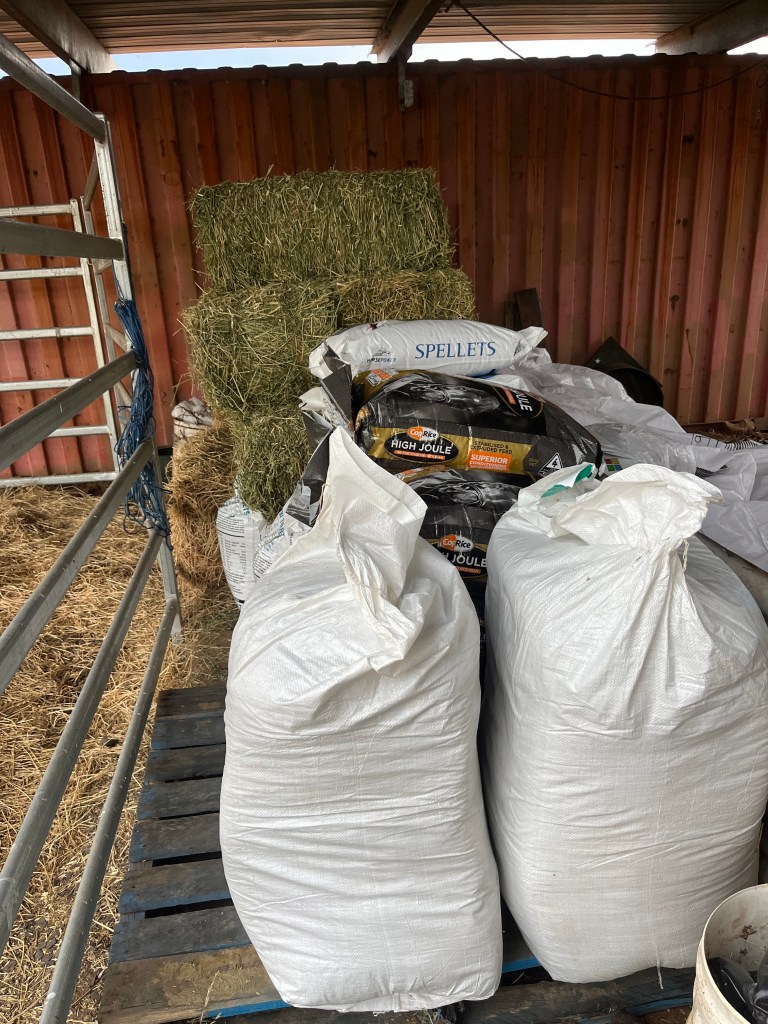
The number one most important thing in horses diets is roughage. Horses are designed to constantly pick, keeping a small amount of feed in the stomach at all times, which also requires them to move to maintain this supply.
Small feeds of 1/2 & 1/2 oaten/wheaten & lucerne chaff are a great base for essential minerals/vitamins to ensure a healthy diet. Extra to this is dependent on each individual and the requirements on them. Slow feeders/nets are great ways to ensure roughage is available at all times and can be placed in various locations to encourage movement. Having them away from the water trough is a great way to ensure movement.
Horses survived in the wild for a long time before humans discovered how to work with them. Keeping them as naturally as possible is the smallest thing we can do in appreciation for the countless things theses incredible animals give to us daily, no questions asked.
It’s not uncommon for people to think my horse is too young to have dental problems and feel it’s not necessary to get their teeth done before breaking in/starting. This couldn’t be further from the truth.
Just like children, horses go through stages of change in their mouths as they grow. They lose baby teeth or caps and often suffer more discomfort than older horses when their permanent teeth are coming through.
Benefits of getting your young horse’s teeth done before introducing them to the bit
– better acceptance of the bit
– lessens the chance of developing bad habits such as head throwing, lugging or holding their head to one side, open mouth, tucking their head, or carrying it high, all in an attempt to avoid pain/discomfort.
– accept the contact with bit better.
– reduce any sharp teeth that may cause pain/discomfort and allow the teeth to wear correctly. Sharp teeth or caps can cut/lacerate the inside of the cheek when the bit is pulled being painful for the young horse just learning to accept the bit.
– remove wolf teeth, if present (small tooth that sits in front of the 1st cheek tooth) they have a nerve supply so therefore can be painful when a bit is placed in the mouth. The bit can easily irritate or loosen the wolf teeth over time.
– eliminate the possibility of the bridle cheek strap pressing against loose caps that may be sore or swollen on the inside of the mouth.
– if your horse is pain free and has a well balanced mouth, they will learn and concentrate better, especially in those important first few weeks of breaking in/starting.
Wolf teeth
Young horses have a lot of changes going on in their mouths between the ages of 2-4 years, this is when they’re shedding caps and getting permanent teeth. It is not not possible to see the back teeth without a gag and things such as loose caps, sharp edges and uneven wearing are not possible to be checked from the outside.
A lot of time and effort has gone into looking after your young horse to this stage of their life when they’re finally ready to be started under saddle, all the more reason to make sure their 1st introduction to their future education is pain free and pleasant.







 RJ3 Sport Horses